
Modernizing your Communications with SBCaaS
Streamline your Enterprise Communications with a flexible, fully-managed cloud solution

Migrating Your On-Premise Communications to the Cloud With SBCaaS
Migrating to the cloud is a strategic move that demands careful planning. For businesses looking to modernize communications, Session Border Controller as a Service (SBCaaS) provides a game‑changing alternative to traditional on‑premise infrastructure. SBCaaS secures and manages VoIP traffic from the cloud, eliminating hardware overhead, while delivering real‑time analytics, automatic policy updates, and pay‑as‑you‑go pricing for a streamlined, cost‑effective deployment.
Features of SBCaaS
Our SBCaaS gives you cloud‑native, scalable VoIP security and much more so you can protect your calls without ever buying or managing hardware.
Protocol Normalization
Security Suite
Media Proxying
Protocol Normalization
Security Suite
Media Proxying
Transcoding
Session Routing
Monitoring & Analytics
Transcoding
Session Routing
Monitoring & Analytics
Benefits of SBCaaS
SBCaaS represents a modern, adaptable approach to business communications, delivering security, compliance, and scalability with unprecedented flexibility.


Key Differences Between SBC and SBCaaS
| Features | SBC (on-premise) | SBCaaS (cloud-based) |
|---|---|---|
| Deployment/Installation | On-premise (hardware/software) | Cloud-based service |
| Management | In-house (IT team) | ifonica |
| Scalability | Limited by physical capacity | Easily scalable based on business needs |
| Cost | Capital expenditure (CapEx) | Operational expenditure (OpEx) |
| Maintenance | Requires a dedicated IT team | Included |
| Updates | Manual updates/upgrades | Automatic (ifonica) |
Key Differences – SBC vs SBCaaS
Phased Migration Strategy
Modernizing your business telecoms doesn’t have to happen all at once. Adopting a phased migration strategy provides a smarter, less stressful and more affordable approach when moving from an existing on-premise solution to a cloud-based.
Scale your Existing
CapEx Investment
Phase your migration strategy at your own pace and affordability.
Save the Earth for future Generations.
Move a little at a time, start with a pilot, then a region, then everything. That way you catch problems early and avoid a single big outage that knocks everyone offline.
Smooth out costs
Instead of one big hardware purchase, you blend what’s left on your current equipment with predictable monthly service fees. It’s easier to plan cash flow and scale spending as you grow.
Keep the phones working
Run your old system and the cloud side-by-side during the move. You can flip users over gradually during quiet hours so people barely notice the change.
Test without panic
Start with a few trunks or sites to make sure calls connect the way they should. If something breaks, it’s quick to fix and affects fewer people.
Give your team time to learn
Your ops people can get comfortable with the cloud tools and processes bit by bit. That means fewer mistakes and more confidence when you make bigger moves.
Tune as you go
You can start with modest capacity and increase it based on actual usage and call quality. That helps you avoid overpaying for unused capacity and ensures the setup meets real needs.
Keep leverage with vendors
By moving gradually you don’t have to tear up contracts or pay big penalties all at once. You get flexibility to time renewals and cancellations smarter.
Get quick wins early
Migrate low-risk and high-value pieces first, like remote workers or overflow calls, so you can start seeing benefits (better monitoring, easier scaling, improved security) right away.
Why Choose ifonica?
Ifonica is dedicated to empowering your business by providing the necessary choices and control to meet your communication goals with ease and efficiency. Choosing ifonica means more than just selecting a service—it means partnering with a company committed to enhancing your organization’s connectivity and supporting your growth in the dynamic world of digital communication.

We are here to help you
Commonly Asked Questions
SBCaaS ensures compliance by allowing regional data placement, providing certified‑level security (encryption, audit logs, RBAC, identity integration) and real‑time compliance dashboards with exportable reports. It also backs these controls with contractual safeguards (SLAs, DPAs) and continuous automated scans that detect and remediate configuration drift, covering both technical and legal requirements of major regulations.
SBCaaS lets you instantly add or remove computing resources through API‑driven provisioning, so workloads can grow/shrink on-demand without purchasing new hardware. This on‑the‑fly scaling eliminates capacity‑planning bottlenecks, reduces latency during traffic spikes, and ensures you only pay for the resources you actually use.
SBCaaS turns large upfront CapEx into predictable operational costs. You only pay for the computing, storage and bandwidth you actually use, avoiding over‑provisioning and the need to purchase, power and maintain physical servers. This pay‑as‑you‑go model also lets you scale resources up/down instantly, so you can match spending to workload demand and eliminate waste from idle hardware.
SBCaaS can be deployed typically a matter of minutes. After selecting the desired region and configuration, the provider provisions the virtual machines or containers automatically via API or dashboard, making the environment ready for use almost instantly.
SBCaaS can link to virtually any system that supports standard network or API integration, including:
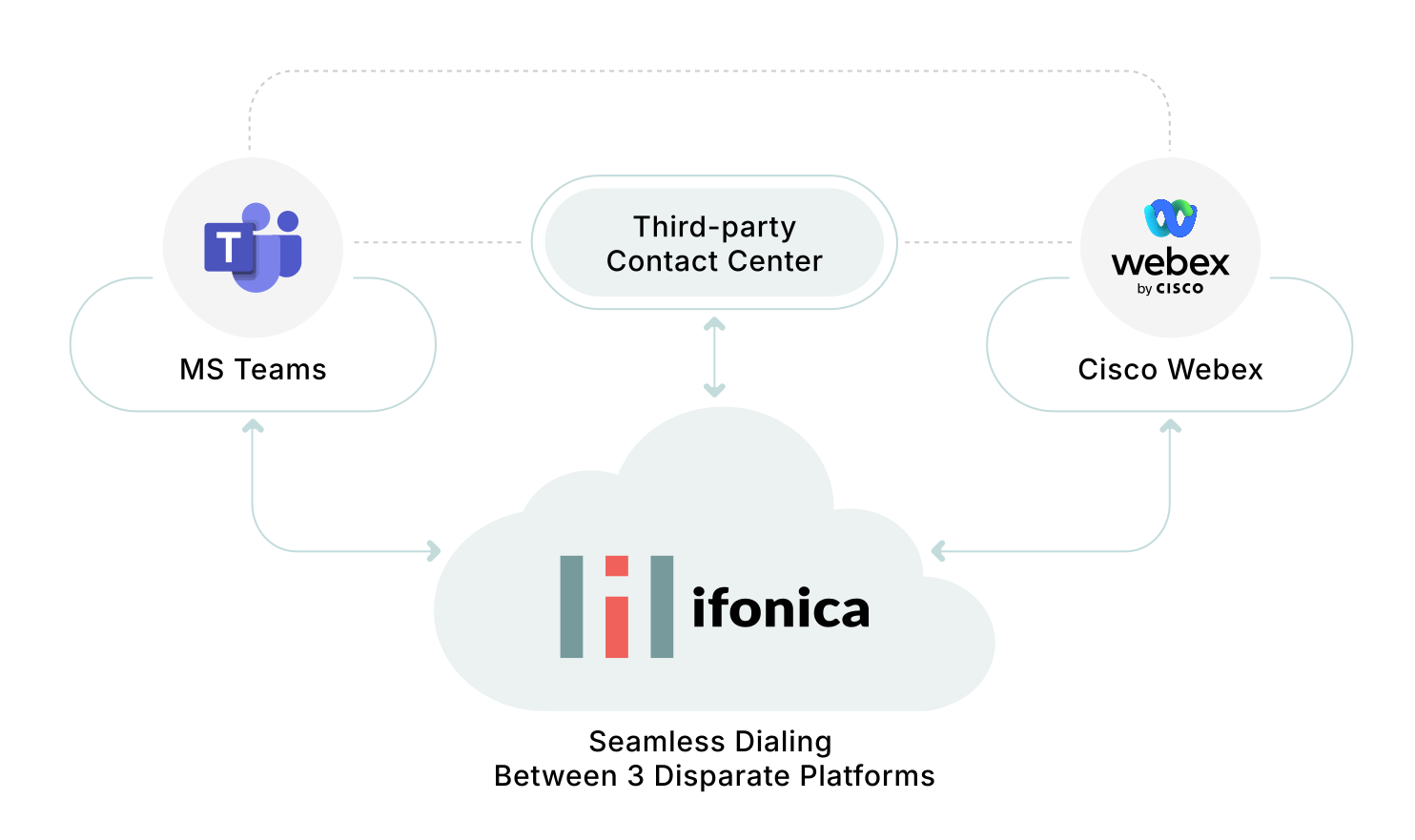
- On premise UC or CC (Avaya, Cisco, Genesys, Mitel)
- SIP Trunking providers (ifonica, Bell, Rogers, Telus, Verizon, T-Mobile)
- Identity & access management (Active Directory, LDAP, SAML/OIDC providers)
- Third‑party SaaS services (Salesforce, ServiceNow, Office 365, Slack)
- Enterprise applications (ERP, CRM, HRIS, finance systems)
- Databases (SQL Server, MySQL, PostgreSQL, Oracle, NoSQL stores)